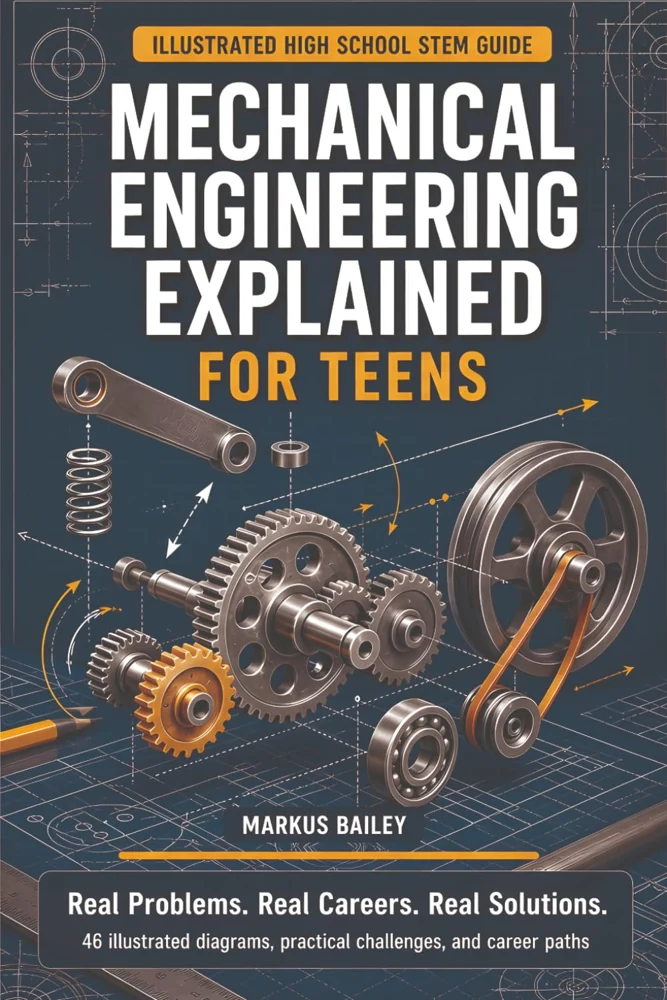
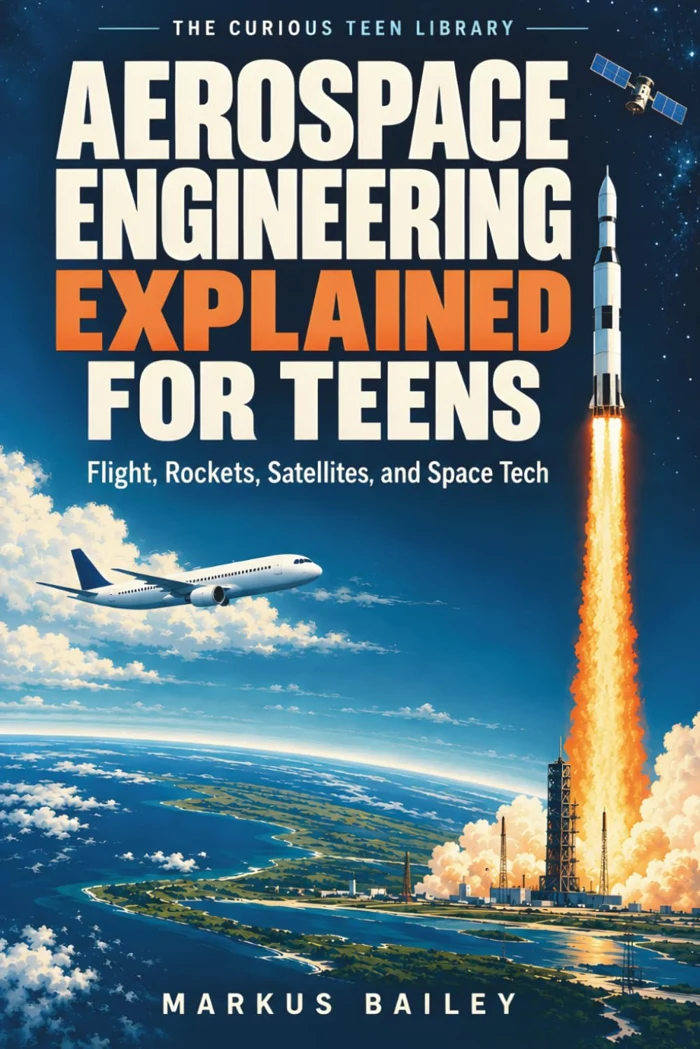
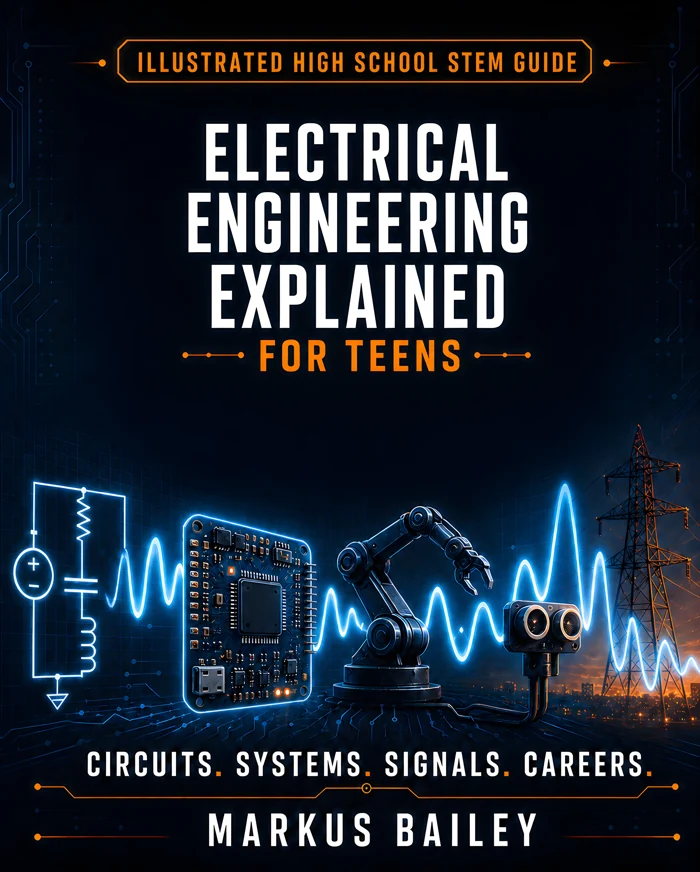
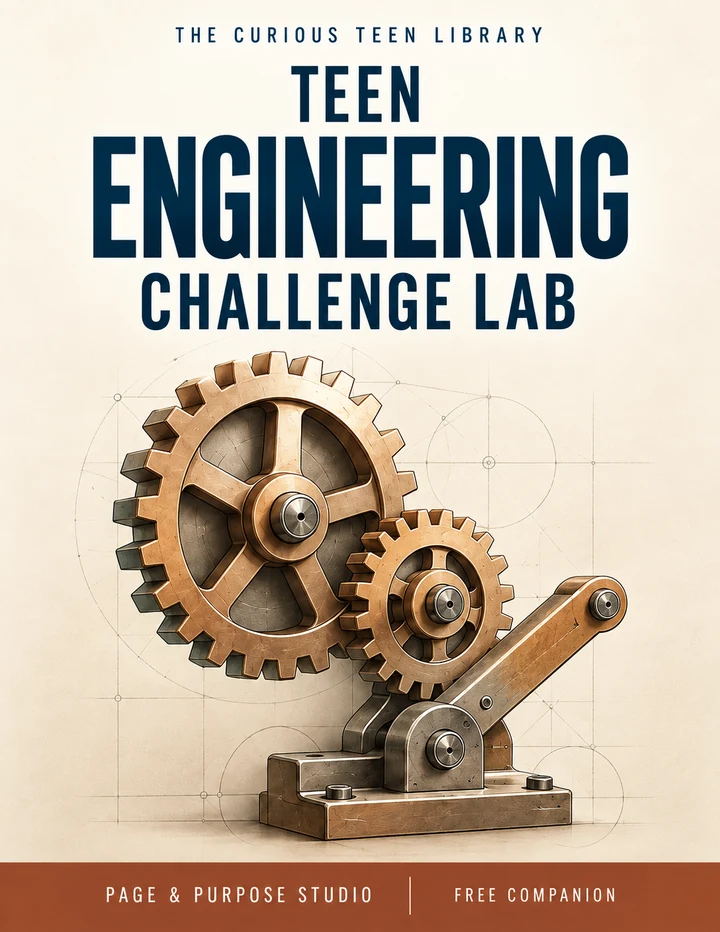
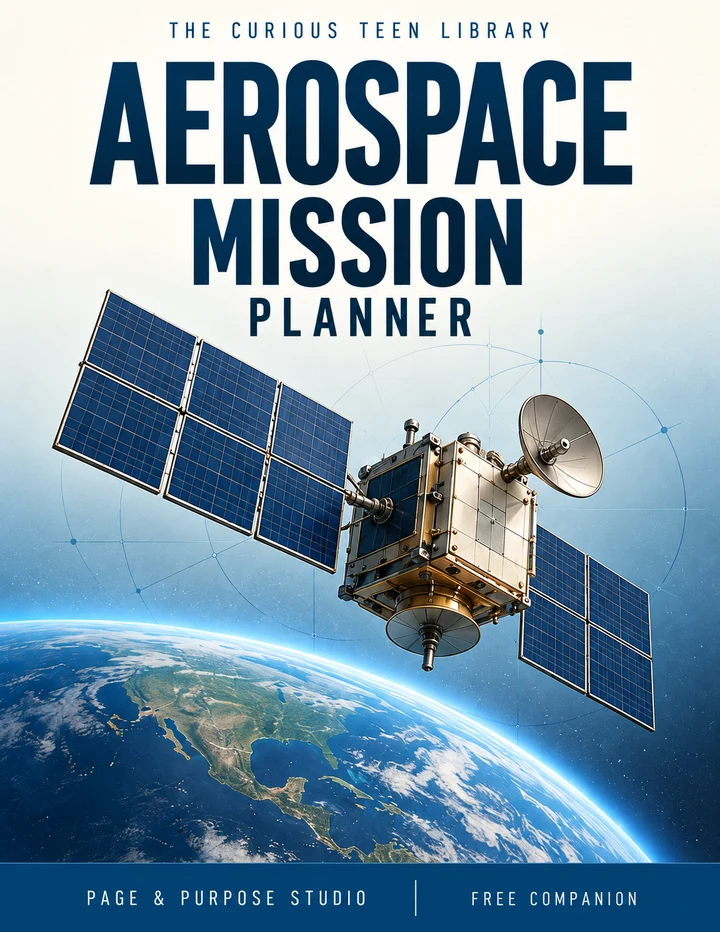
Choose their starting point. Each book is available individually on Amazon.
Big ideas. Everyday connections.
A little “why?” can go a long way.
A taste of the ideas these subjects open up. Choose a question to explore.
ELECTRICAL / SYSTEMSWhat changes when you open a switch?Explore the idea
In a simple battery-and-bulb circuit, opening the switch breaks the conducting path.
Current stops flowing through the bulb. Engineers use that basic idea to control what a
system does.
Follow the electrical path MECHANICAL / MOTIONWhy does a longer wrench make a stubborn nut easier to turn?Explore the idea
The turning effect of a force is called torque. Apply the same perpendicular force farther
from the pivot, and you get more torque. It’s one way a simple design choice changes what
a machine can do.
Follow the mechanical path AEROSPACE / SPACEIf gravity reaches space, why doesn’t a satellite fall straight down?Explore the idea
An orbiting satellite is falling toward Earth while moving sideways fast enough to keep
missing it. Reaching space and staying in orbit are different engineering challenges.
Start with circuits, machines, or space. Let their interests guide the reading order.
Give them room to explore.
Discover what engineering involves before deciding whether it is a path to pursue.
Choose something personal.
Match the book to the thing they love asking about. One thoughtful choice is enough to
begin.
MB
Meet the author
Markus Bailey
Author and creator of Page & Purpose Studio books for learning, creativity, and
everyday discovery. The Curious Teen Library invites readers to follow an interest and see
where it leads.
KEEP ASKING. KEEP EXPLORING.
Before you choose
Good questions.
Here are a few answers.
Which book should we start with?
Start with the subject that already interests your teen. Choose Electrical for circuits and systems, Mechanical for forces and machines, or Aerospace for flight and space. Each book stands on its own; there is no required reading order.
What ages are these books for?
Electrical and Mechanical are written for teens exploring engineering concepts. Aerospace is written for ages 14–17. Reading confidence and interest matter, too: check the description and any available sample on the individual Amazon listing before choosing.
Are these textbooks or hands-on build manuals?
These are introductions to engineering ideas, real problems, and design choices. They are not a complete school curriculum or a hardware kit. Aerospace is a conceptual guide, not instructions for building or launching rockets. All three books have separate free companion resources for further exploration.
Am I buying a three-book set?
Each book is available individually on Amazon. Choose the subject that interests your teen; every book stands on its own.
Where do I find prices, formats, shipping, and returns?
Each purchase button opens that book’s Amazon listing in a new tab. Amazon shows current prices, available formats, delivery options, and applicable return terms for your location. Your purchase and payment take place on Amazon.
Do I need to buy a book or join a list to use the free companions?
No. The Electrical, Mechanical, and Aerospace companions are separate free resources, with download access that does not require joining the reader list. The books remain complete on their own.
The Curious Teen Library / Engineering Collection
The next question could start here.
Circuits. Machines. Flight. Space. Find the book that makes them want to know
more.